
Feldenkrais Method
Human Development
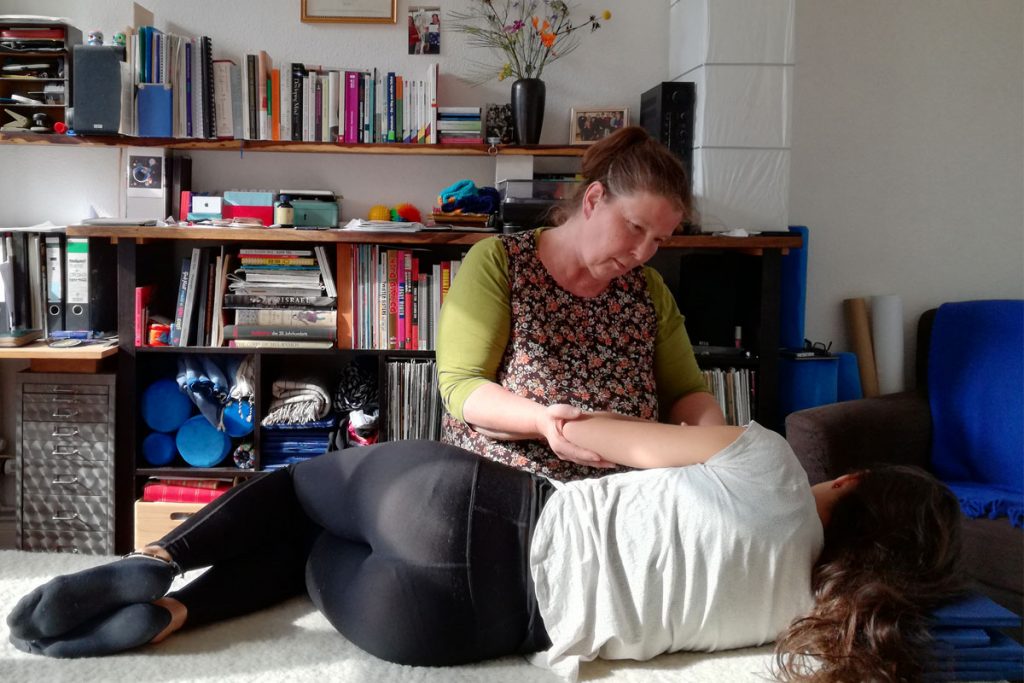
Our time in the womb is very narrow and limited. And yet before we have even come into the world we start to turn, kick and box, much to the displeasure of our mothers. After birth we need approximately one year to be able to put our feet in our mouths alone, to roll over, to lift ourselves up, to crawl, to sit and to stand, and finally to run. If you watch babies as they make these enormous achievements - and this is what Feldenkrais did extensively - it’s clear how much intelligence these little creatures use to work out new possibilities. From this observation Feldenkrais came to the belief that we carry this intelligence within us, even if we don’t fully use it.
Statics
And what does gravity have to do with it?
Unfortunately, education, environment and society soon come crashing down on us. The fun has an end, we have to conform. The chairs in kindergarten aren’t the right size, the steps are too high, you aren’t allowed to let your jaw drop when you’re looking up - “close your mouth”.
Later at work, we sit on ergonomic office chairs that don’t allow any movement and we spend the whole day staring at a screen or executing repetitive movements.
To compensate we do sports, but have forgotten how to properly move and injure ourselves in the process.
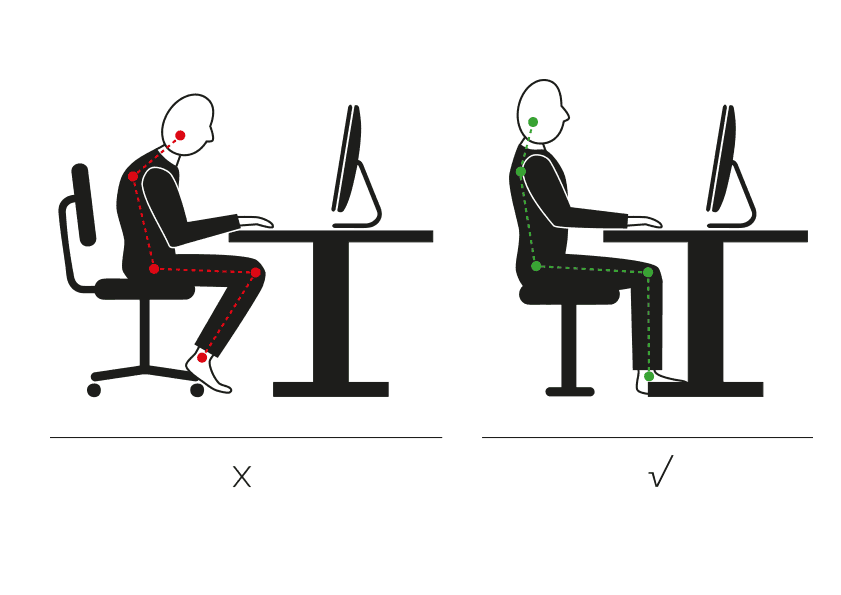
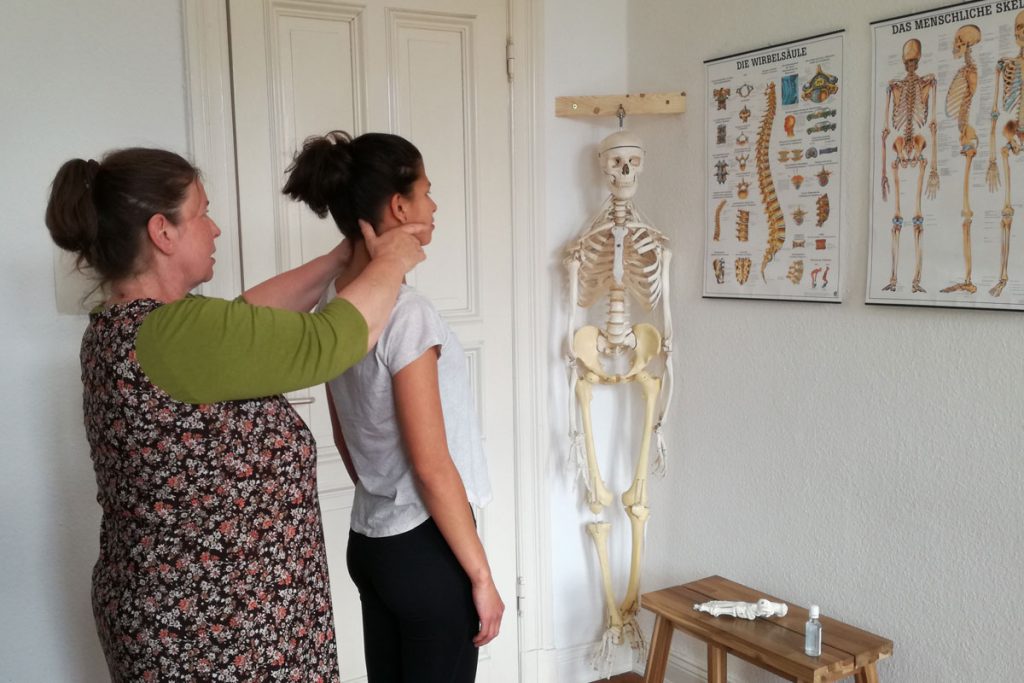
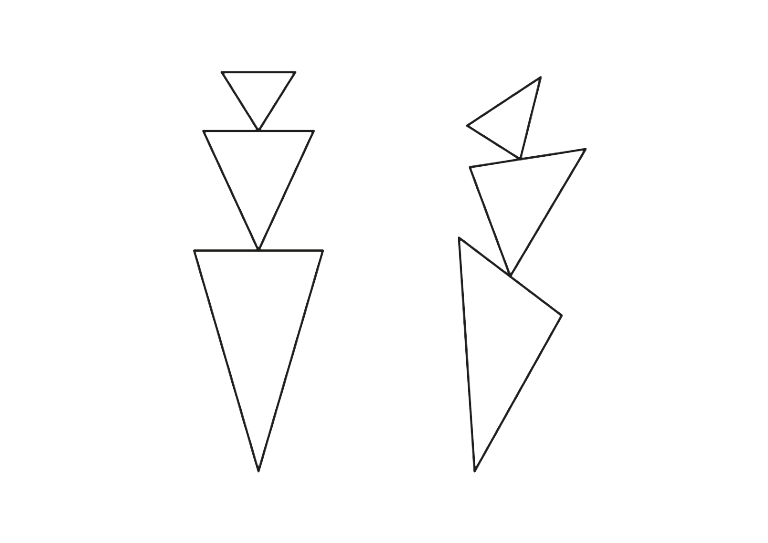
Moshe Feldenkrais had an analytical brain, and he understood that our skeletons - which are undoubtedly brilliant inventions to overcome gravity - can best be best kept upright if we understand the laws of statics. How do the feet, pelvis, shoulders and head relate to one another to allow us to stand, walk, sit and lie down as effortlessly as possible?
And how can we not only understand these laws, but also internalize them?
The movements in Feldenkrais are carried out with a slowness and lightness that allow us to concentrate on what we are doing, so that nothing escapes our attention. Each movement, however small, creates a domino-like chain of action within our organized skeletons. No toe can move without having an effect on the head or shoulders. To allow the nervous system to process this tremendous amount of information there are long pauses throughout sessions.
Emotions
Our vagus nerve is responsible not only for different organs, tissues and the digestive tract, but also for the parasympathetic nervous system, for relaxation and calmness. When we are under a lot of stress, a continuous alarm - the fight or flight response - is set off in the sympathetic nervous system. We can no longer find peace and quiet, and suffer from even more stress, insomnia, tension, restlessness and irritability: an unholy cycle that feels unstoppable.
The vagus nerve can be targeted and positively stimulated through the diaphragm and breathing, as well as through slow and careful movements. The nervous system calms, slows down, and we have the chance to get out of this cycle.
Stress can manifest itself in different ways. We don’t just lose control emotionally, but simultaneously have problems with our balance and equilibrium. The ground disappears from under our feet. We don’t trust our own judgement or feelings any more. Moshe Feldenkrais even went so far as to say that emotional problems can manifest in posture and movement. To reverse this is relatively easy. Easier, in any case, than resolving a deep trauma through years of therapy and analysis. Feldenkrais didn’t claim to be able to remove trauma, but he did claim to be able to alleviate the surrounding circumstances and effects.
Brain
Looking at it the other way around, Feldenkrais also believed that emotional problems can stem from a limitation in movement. When, for instance, dancing, laughing, climbing and screaming is forbidden from early childhood, how can a fun-loving, open person develop from this? Where can the security you need for free-flowing movement come from? The security to be able to say where you are in a space?
That, which is today proven and recognized in neuroscience as the plasticity of the brain (mobility, changeability), demonstrated by neuroscientists such as Oliver Sacks and psychoanalysts such as Norman Doidge in their amazingly exciting case studies, could only be described by Moshe Feldenkrais in the 1950s as a life-long ability to learn.
For the many people who say, that they think they are too old, this should be incredible good news.
The only thing you need is curiosity!
Das einzige, was man braucht, ist Neugierde!